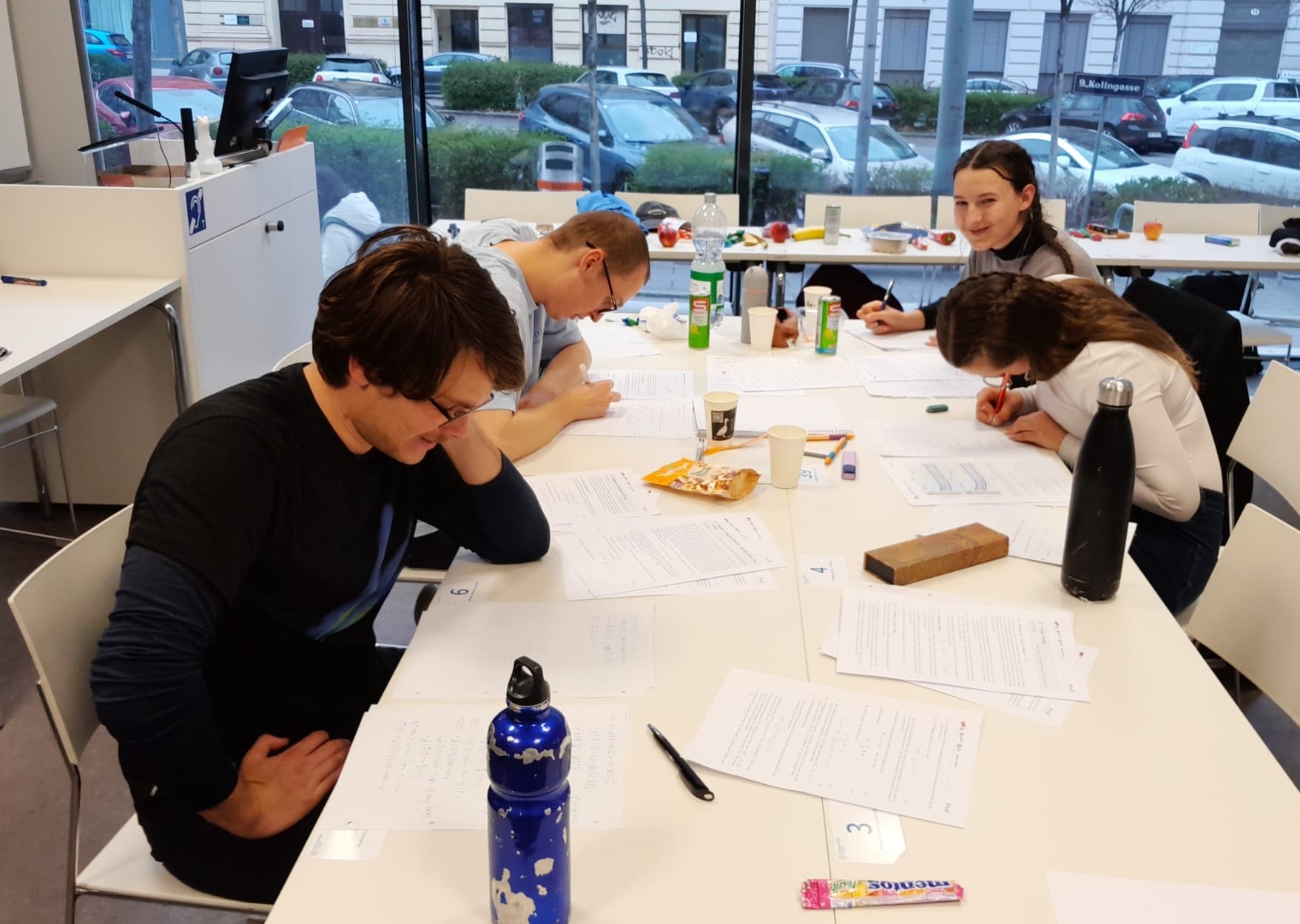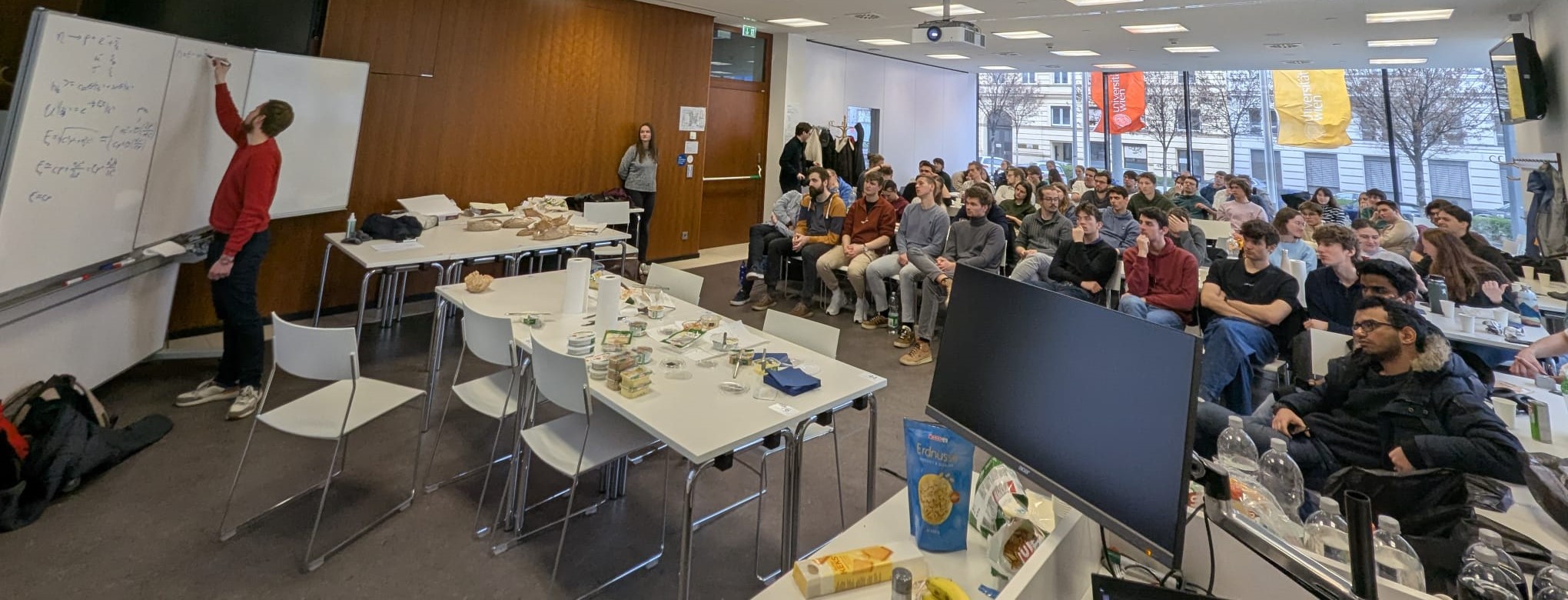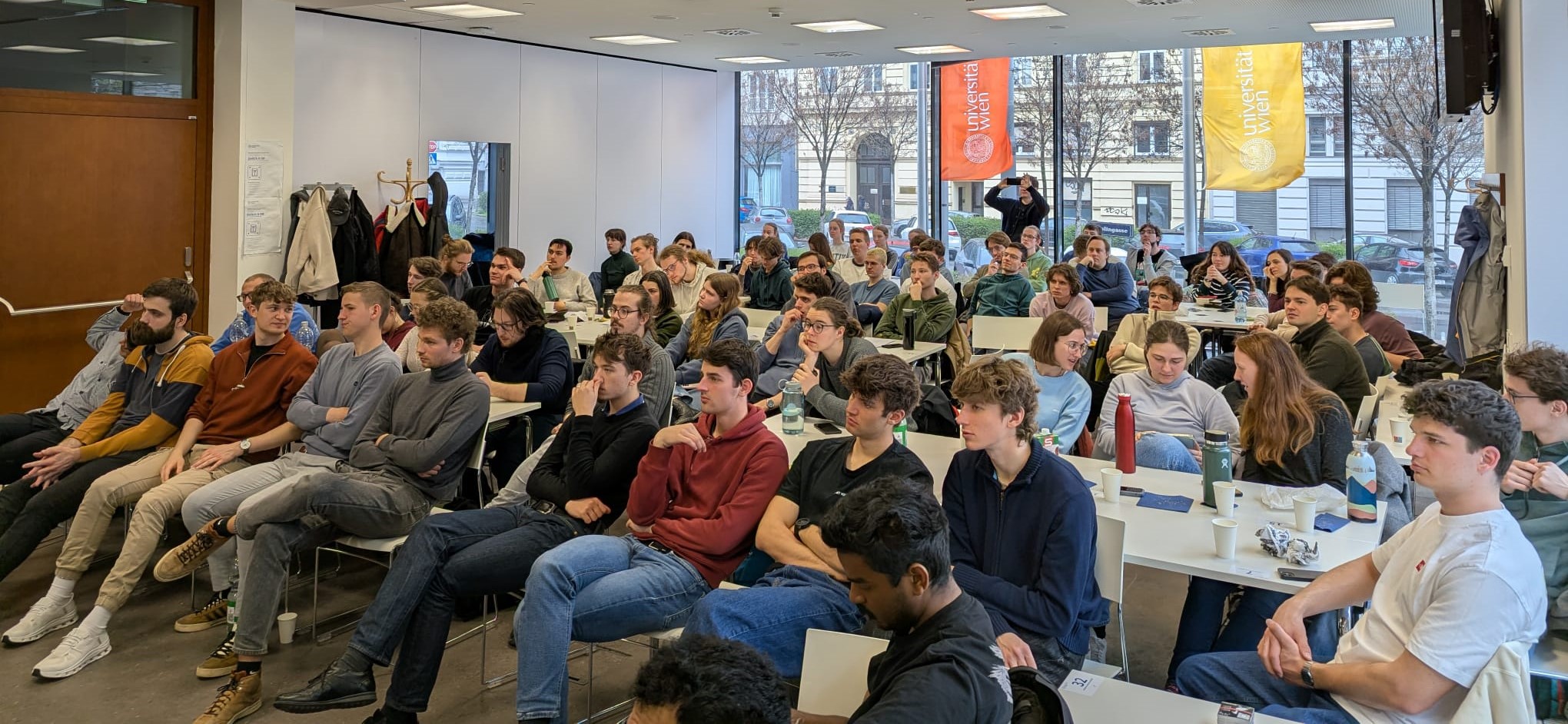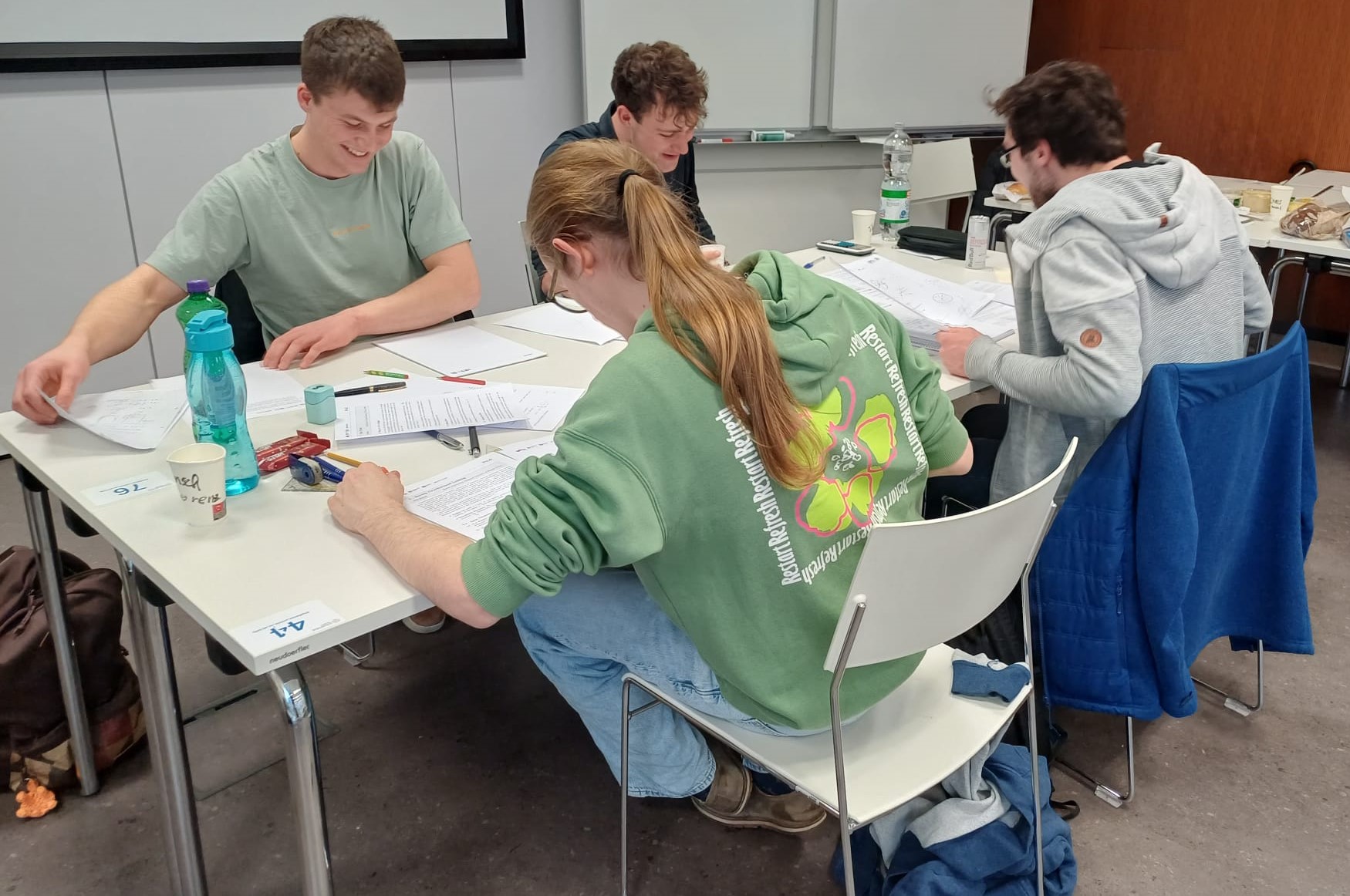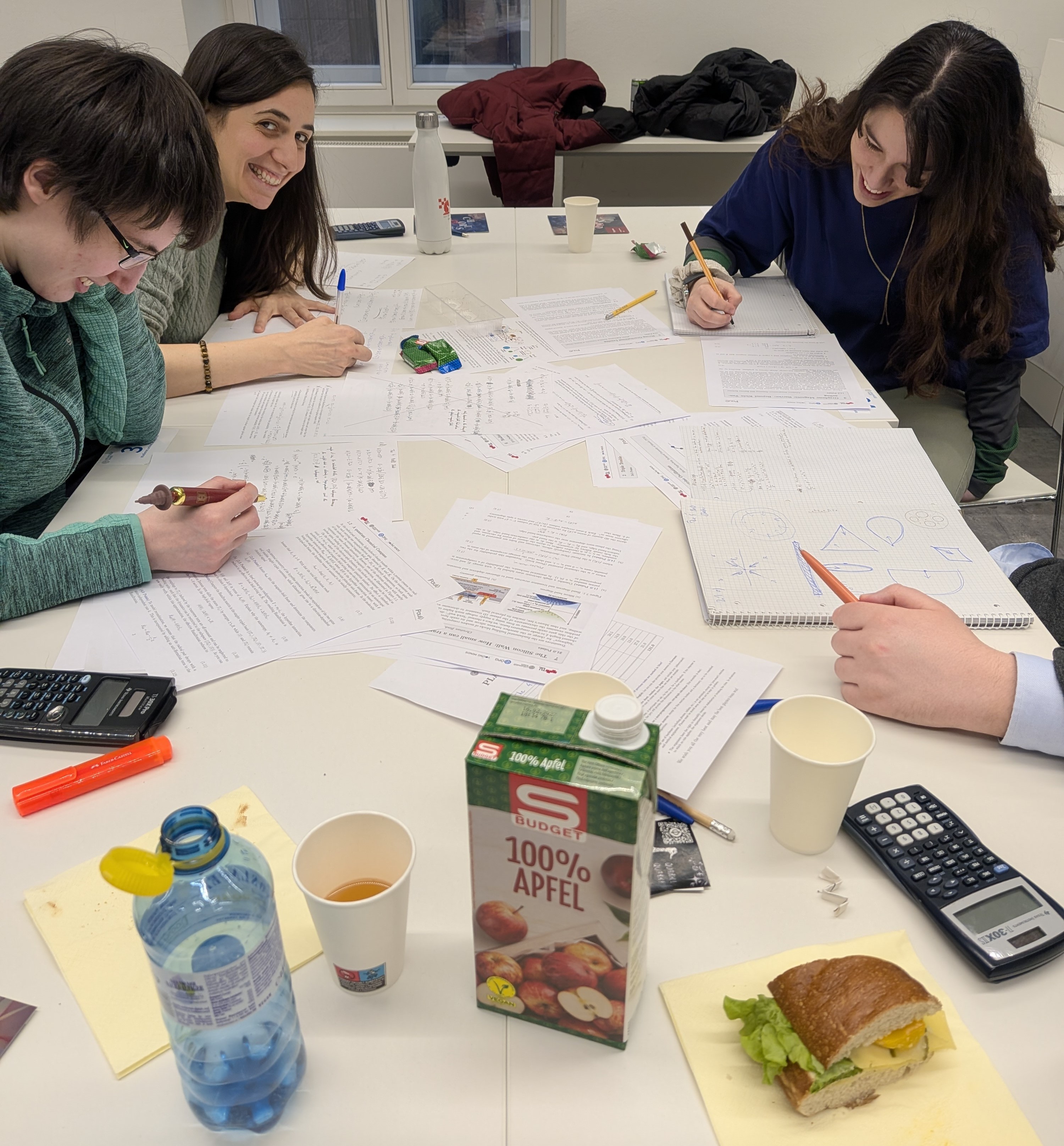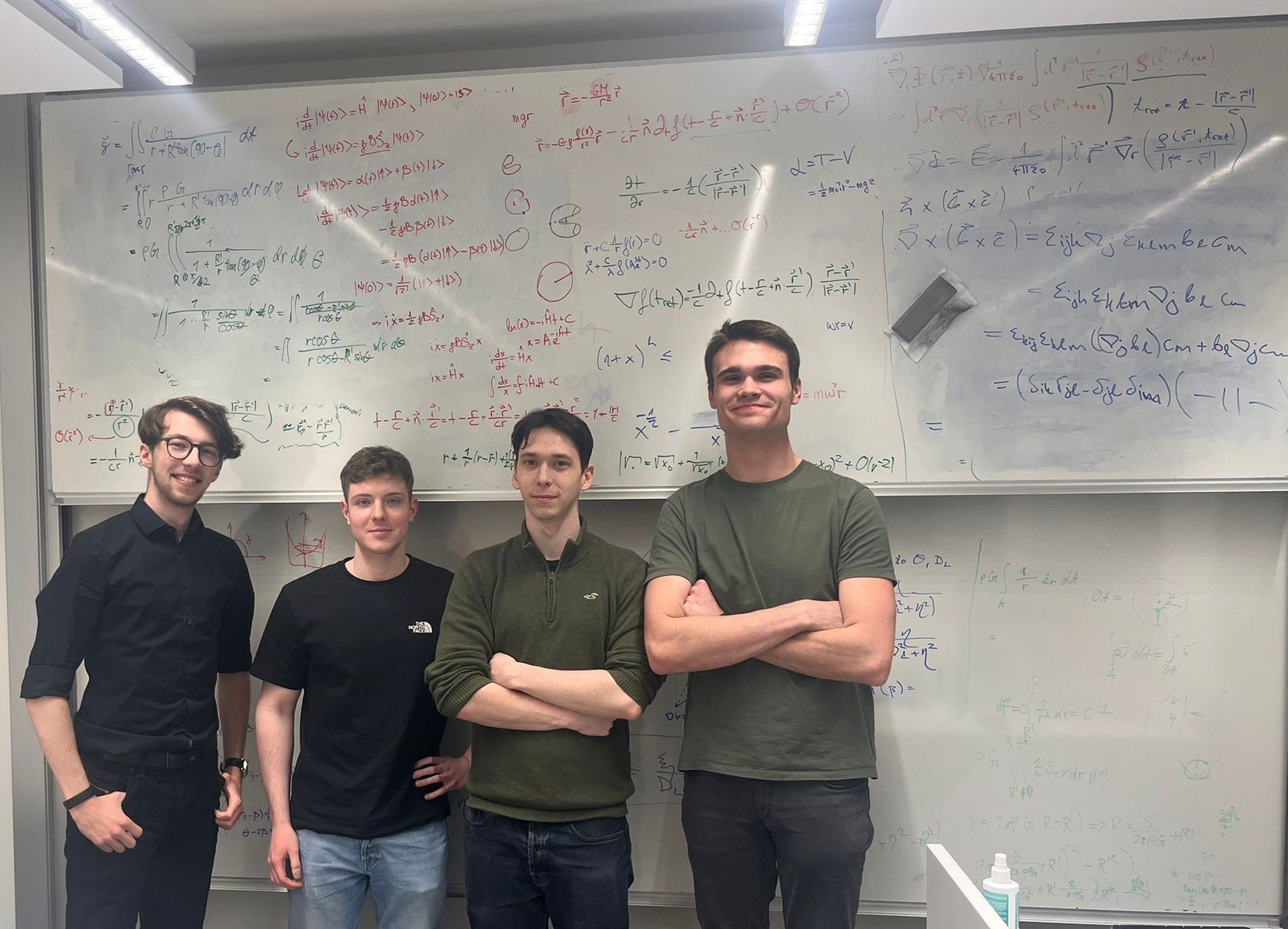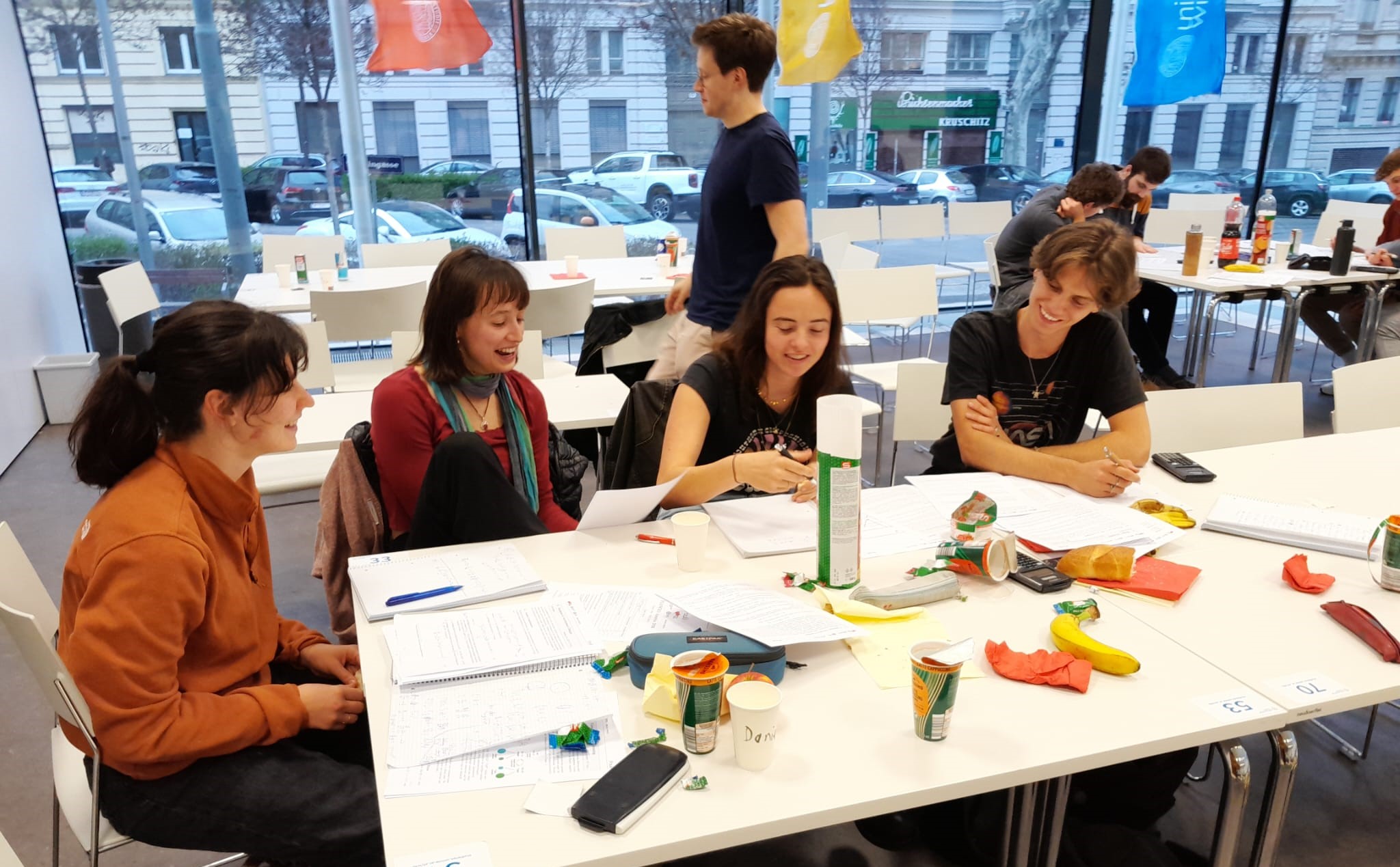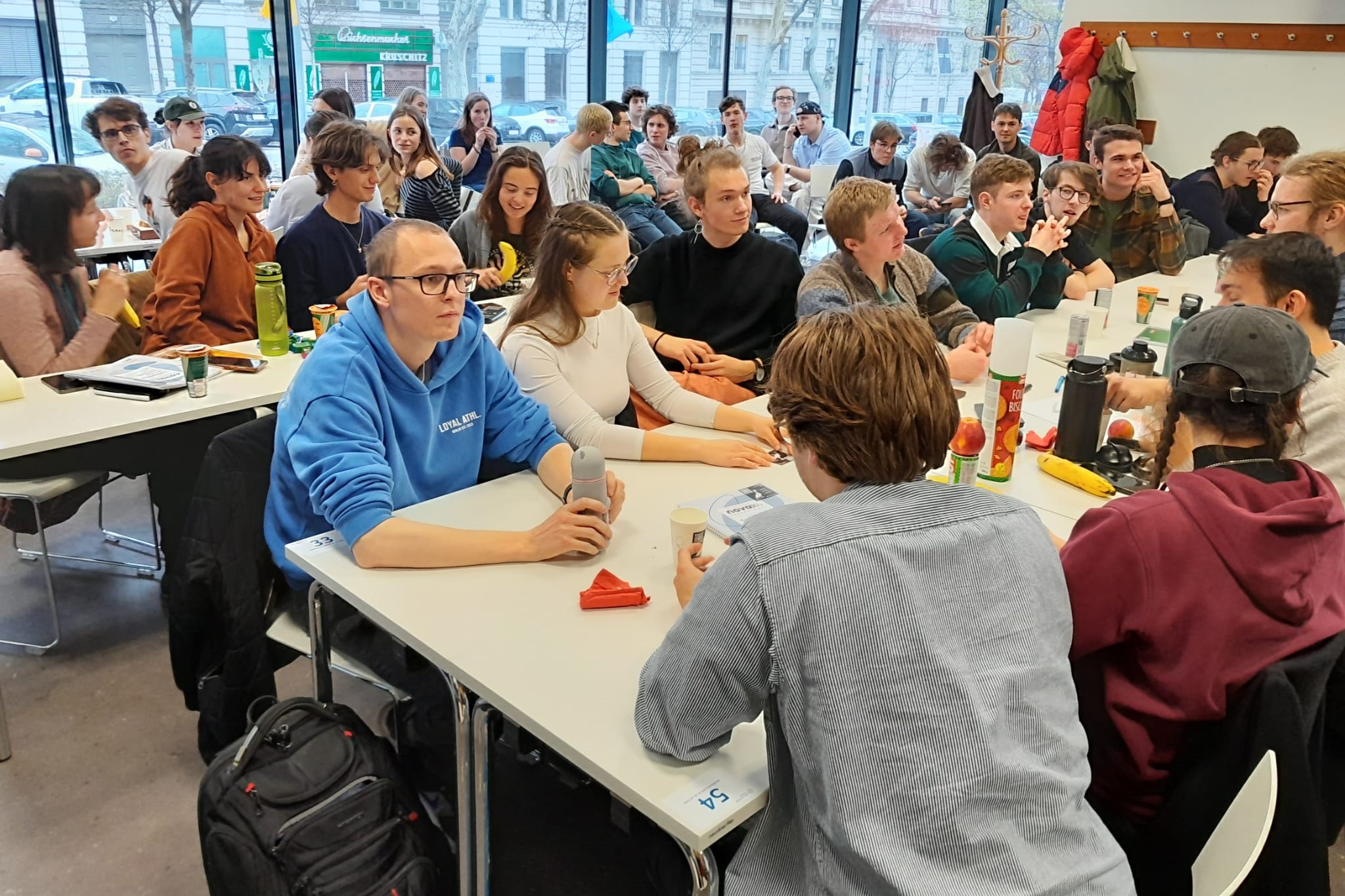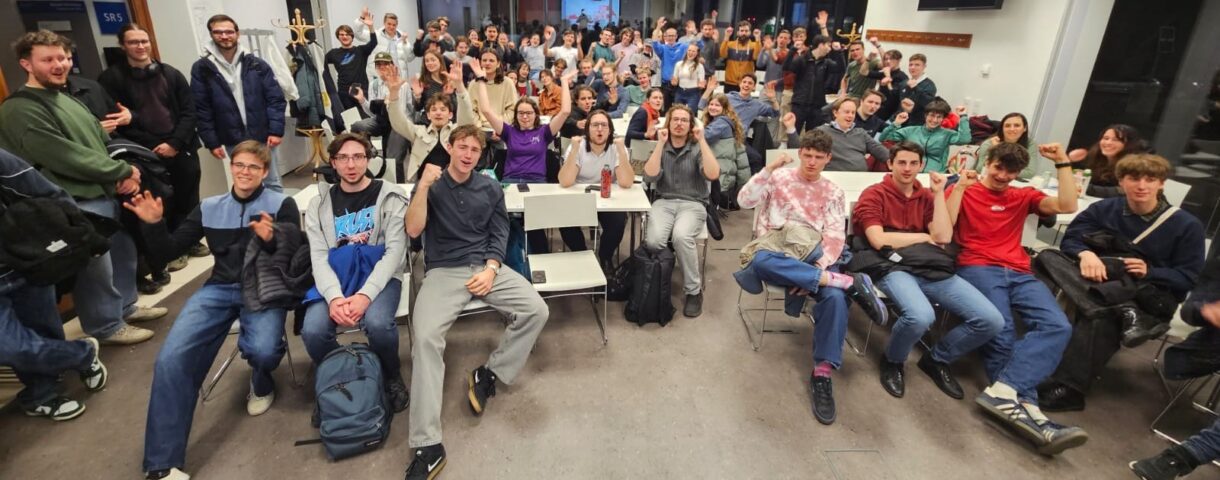
And once again, another legendary PLANCKS weekend came to an end far too quickly. As promised, we moved PLANCKS 2026 to Vienna – and Vienna delivered. More teams, more chaos, more physics, and in the end another result that gives you plenty to think about. An impressive field – students from Vienna, Graz, Innsbruck and Linz, all with the same goal: to calculate until their heads are smoking and their fingers are sore. Many familiar faces, some new ones, and as always: not enough rolls for everyone.
This time, no fewer than twenty (!) teams set out to win PLANCKS Austria. As a result, Austria earned a second spot at the international final! That means the top two teams get to travel to Eindhoven – with financial support included!
After the reception, participants were led to their rooms, where they got to tackle seven fascinating but merciless problems. The topics spanned the entire spectrum of physics:
- Quantum Sensing: The trick migratory birds use to always be the first ones at the beach. Those little rascals always reserve all the sun loungers for themselves with it. Unfair!
- Triple Trouble: What does the ideal planet look like when you’re a bit short on cash? How does the water in a rotating bucket behave? Is this table stable? Probably? Well, hopefully.
- Graphene Magnetic Barrier: You may have heard of Klein tunneling. But this problem goes even further. To infinity? No, just beyond.
- Neutrino Oscillations: The Standard Model had a long-running dispute with the solar neutrinos. But in this problem, you find the solution in no time: oscillate it off, oscillate it off.
- Strong Gravitational Lensing: Galaxies visible multiple times – intergalactic illusions?! I’m already seeing stars. What’s all this about: galaxy clusters as lenses? No thanks, I’ll stick to my reading glasses.
- Radiation of Accelerated Particles: Here you learn how quickly classical physics falls apart: electrons orbiting the atomic nucleus? What nonsense.
- The Silicon Wall: In this problem, you calculate how thin the gate oxide can minimally be made. Moore’s law is thus physically limited – because without a gate, nothing works.
You can find the tasks and their solutions here.
The Award Ceremony
The tension at the award ceremony was, as always, almost unbearable. Bar charts shot upward – and this year they climbed higher than ever before!
Fifth place went to the Cylindrical Penguins with 19.25 points, boasting the best result on the Silicon Wall problem. Penguins. Cylindrical. Strange that they’re actually allowed to study at the University of Vienna.
Just waddling past the penguins, The Misfits narrowly missed the podium with a strong 19.75 points. The team, which had only met on the day of the competition – assembled from individual registrations – managed to achieve the second-best result of the entire field on the Radiation problem. The name seems somewhat ill-fitting in hindsight, as they turned out to work rather well together.
Third place went to Lost in Phase Space with 20 points. Apparently not quite as lost as the name suggests, since they scored points on 6 out of 7 problems. The night from Saturday to Sunday was evidently a long one – at the Sunday award ceremony, some of them did look genuinely rather lost.
Now things get serious. The top two teams travel to the international final in Eindhoven. Drumroll… Second place went to Wirbelfrei with an impressive 36.25 points! Congratulations – you’re going to Eindhoven! Originally only a team of three, Wirbelfrei took on the one healthy member of a TU Vienna team weakened by illness – or was it the celebrations the evening before? – at the last moment. This seems to have paid off, as the Graphene Barrier posed no barrier to them, and they also scored the most points on the Neutrino Oscillations problem. With that, they left all the other teams behind.
All the other teams? No! A team populated by indomitable Grazers refused to stop resisting. The winning team. Named after the great Viennese himself – and therefore somehow predestined for a victory in Vienna. Ludwig’s Boltzmänner. With top performances in Quantum Sensing, Triple Trouble and Radiation of Accelerated Charges, they claimed victory with 39.25 points. Congratulations – first place and a spot in Eindhoven are well deserved!
The Professors’ Team
What would PLANCKS Austria be without the professors’ team? This year, Graz professor Enrico Arrigoni was joined by Viennese professor Harald Steinacker. Once the dust, stirred up by four hours of concentrated calculation, had settled, the verdict was clear. Quantum Sensing, Graphene Barrier and Neutrino Oscillations lay defeated on the ground, and the Radiation of Accelerated Charges problem had its pocket money taken away. 47 points – the students were beaten once again. That stings. Arrigoni and Steinacker demonstrated, politely but mercilessly, that decades of experience do make a difference, and why they’re the ones allowed to write on the board at the front of the room.
The Elephant in the Room: the AI
Well. ChatGPT scored 128 out of 131 possible points. The silver lining: ChatGPT uses the internet, the sneaky cheat. A fairer comparison is provided by the locally running AI of PAULI member Hannes. After two hours of computation time and a hefty electricity bill, it reached 57.75 points – putting it above even the professors’ team. Beatable.
Outlook 2027
We’ll be back next year. Whether in Vienna, Graz, or somewhere in between – we’ll decide once we’ve recovered from this weekend. What we can promise: the problems will once again be instructive and fascinating, and there will be more rolls. Well, that last part might be a lie.
Until then, do as the AI does: train. The professors probably are too.
See you next year –
PAULI